Following an August 7 rally held by the Harris-Walz campaign in a hangar outside Detroit, MI, Donald Trump has cried wolf. Or rather, Trump cried AI.
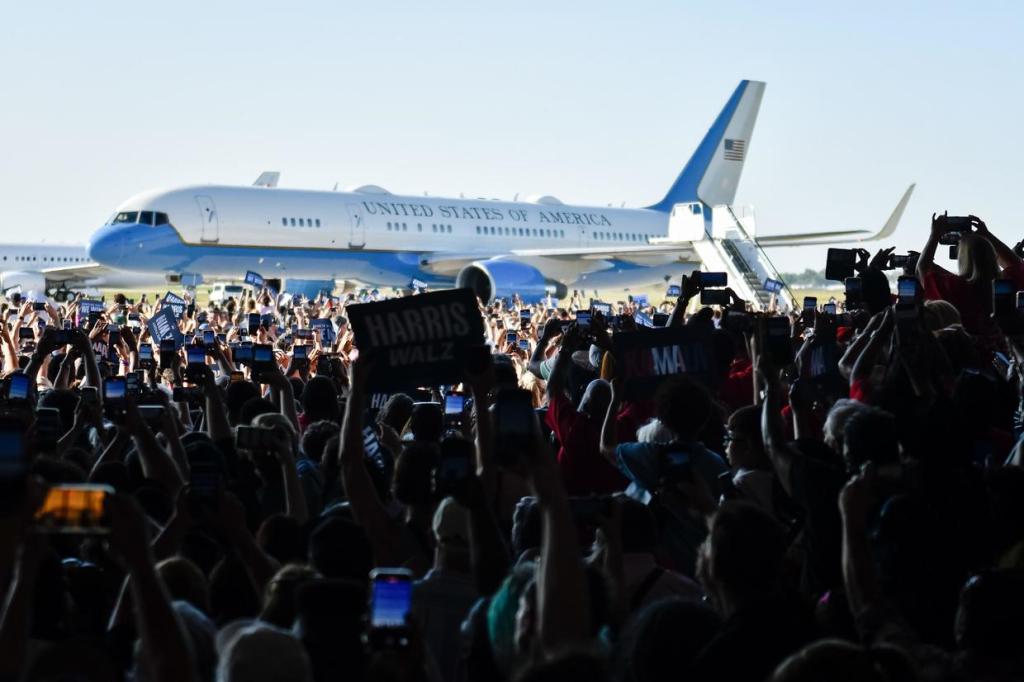
Following a rambling press conference in which Trump claimed that his speech to supporters on January 6th had a larger crowd than MLK’s “I have a dream speech”, Trump’s obsession with crowd sizes has drawn criticism. In his latest attempt to deny reality, the disgraced former President claimed in a post on Truth Social that crowds attending a Harris-Walz rally in Michigan must have been “A.I.’d” by Democrats. This narrative appears to have originated with right-wing opinion leaders, who took to X to post their “proof” that photos from the rally had been altered. This claim was quickly debunked by journalists in attendance, and by an effort by rally goers to share their own photos from the event.
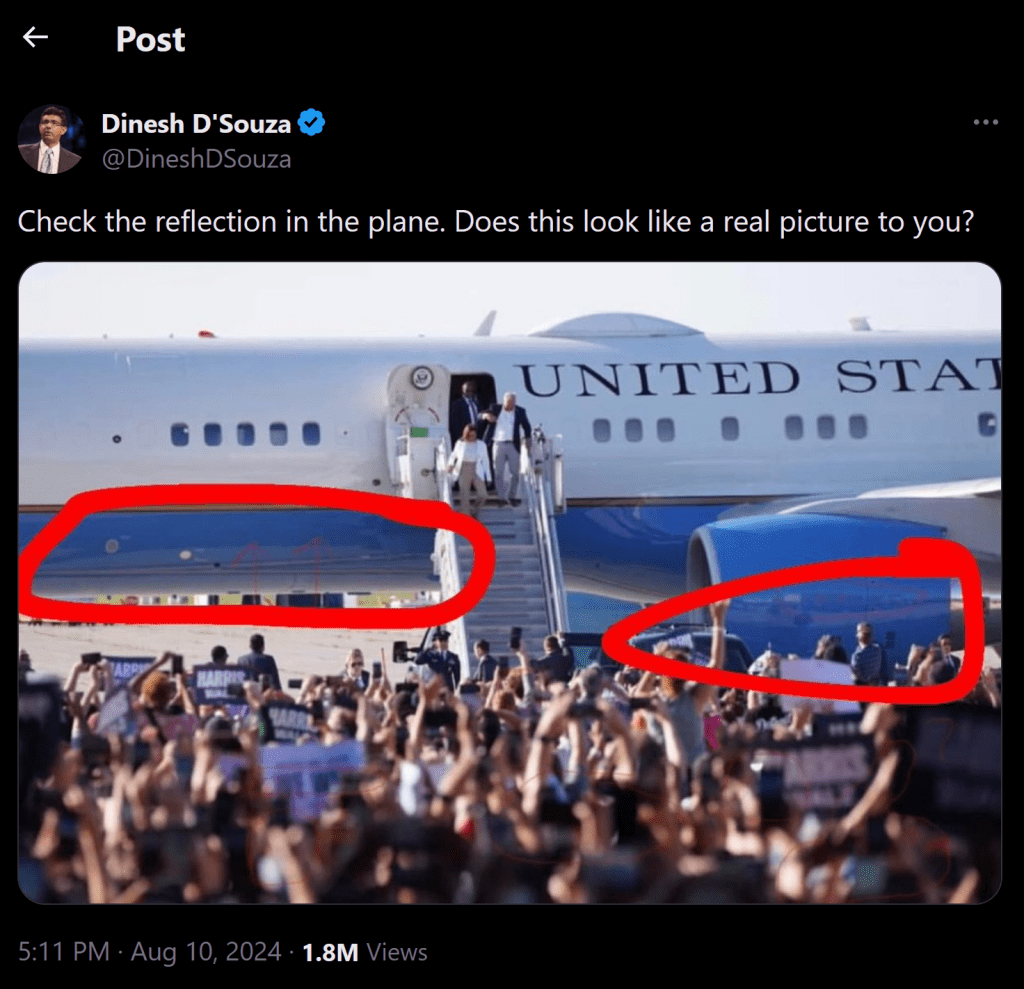
What I believe we’re witnessing with these easily disprovable claims of AI tampering is the breakdown of trust in video media. This is explored in greater detail in my Corrosive AI Thesis, but the main thrust of the idea is that as generative AI technology improves, our collective trust in video as a medium will degrade. We tend to see video as an authentic representation of the world as it is, but with how life-like AI video is becoming, that may not be the case for much longer (1). As this trust in video begins to break down, we start to see incidents like this, where people can deny the world as it actually is, finding a convenient explanation in AI. It’s confirmation bias on steroids.
The question remains: why deny reality like this? Has Trump become that insulated from reality? The answer, I suspect, is more insidious than that. Spreading disinformation which calls into question the support that the Harris-Walz campaign is receiving is likely a way of priming Trump loyalists to reject the results of the 2024 Presidential Election. The trends in election disinformation we see coming out of Trump world right now closely mirror efforts made by the same group to spread misinformation about mail-in voting in 2020. By convincing loyalists to believe that the mail-in voting system was broken, the Trump campaign laid the groundwork for their numerous challenges to the results of the 2020 election. By spreading disinformation about the energy and support which the Harris-Walz campaign is enjoying right now, the Trump campaign is similarly priming its supporters to reject the results of this election. The Washington Post has some good reporting which provides further detail on this comparison, take a look here.
While the claims that Democrats are using synthetic media coming from Trump world are demonstrably false, it seems that the call is coming from inside the house. In July, Elon Musk promoted a video which used AI voice technology to misrepresent Vice President Kamala Harris. In 2021, Musk similarly amplified claims that footage of the January 6 Capitol Riot had been censored. It’s also worth noting here that Musk has endorsed Trump “full-throated”, and will be interviewing the convicted felon on August 12 on X.
(1) Nitin Verma at the University of Texas Austin is doing great work in this area, I’d recommend taking a lot at the research he’s doing on video/media trust.
 Corrosive AI